
Independent guide · Denver, Colorado
Denver Criminal Law Guide: From Arrest to Resolution
How a criminal case actually moves through the Denver courts, explained in order and in plain English, so the next hearing, form or phone call makes sense before it happens.
Most people meet the system on the worst day of their year.
An arrest, a summons in the mail, a call from a family member at the Downtown Detention Center. Then come words like advisement, PR bond, filing, disposition and deferred judgment, usually delivered fast and once. This guide slows those words down. We map the order things tend to happen in Denver, point to the Colorado statute or court rule behind each step, and list the questions worth bringing to a licensed attorney.
Sources named throughout: Colorado Revised Statutes (C.R.S.), Colorado Rules of Criminal Procedure (Crim. P.), Colorado Judicial Branch self-help pages.
The order of a case
Five stages, in the order they usually happen
Every case is different and some skip steps entirely, but nearly every Denver criminal matter passes through some version of these five moments.
-
01
The Contact.
A stop, a call for service or a warrant. What is said here often shows up later in reports, so the rights covered in our police contact guide matter from minute one.
-
02
The Advisement.
The first appearance before a judge or magistrate, usually within days of an arrest. Rights are read, bond is set and a protection order may issue.
-
03
The Charge.
The prosecutor decides what, if anything, to file. The statute and the class of the offense set the possible range, which our crime classes guide lays out.
-
04
The Choice.
Discovery, negotiation and motions lead to one decision that belongs to the accused: accept a plea offer or go to trial.
-
05
The Order.
Dismissal, acquittal or a sentence, and later, for many cases, the question of whether the record can be sealed.
Six guides
Start with the page that matches today
Each guide stands on its own. Hover or tap a panel to open it.
-
 § 01
Case Process
Advisement, bond, filing, preliminary hearings, pretrial motions and the road to a plea or a jury, with the rule behind each step.
Read the case process guide -
 § 02
Bond and Advisement
What a Denver first appearance looks like, the bond types Colorado law allows, common conditions and what a protection order means for the person released.
Read the bond and advisement guide -
 § 03
Crime Classes
Felony classes 1 through 6, drug felonies, misdemeanor and petty offense classes, and the presumptive ranges named in statute.
Read the crime classes guide -
 § 04
Police Contact Rights
The right to stay silent, the right to a lawyer and how consent to a search works, stated neutrally and without tactics.
Read the police contact rights guide -
 § 05
Sealing Records
Who may be eligible to seal a Colorado criminal record, the difference between petition and automatic sealing, and what sealing does not do.
Read the sealing records guide -
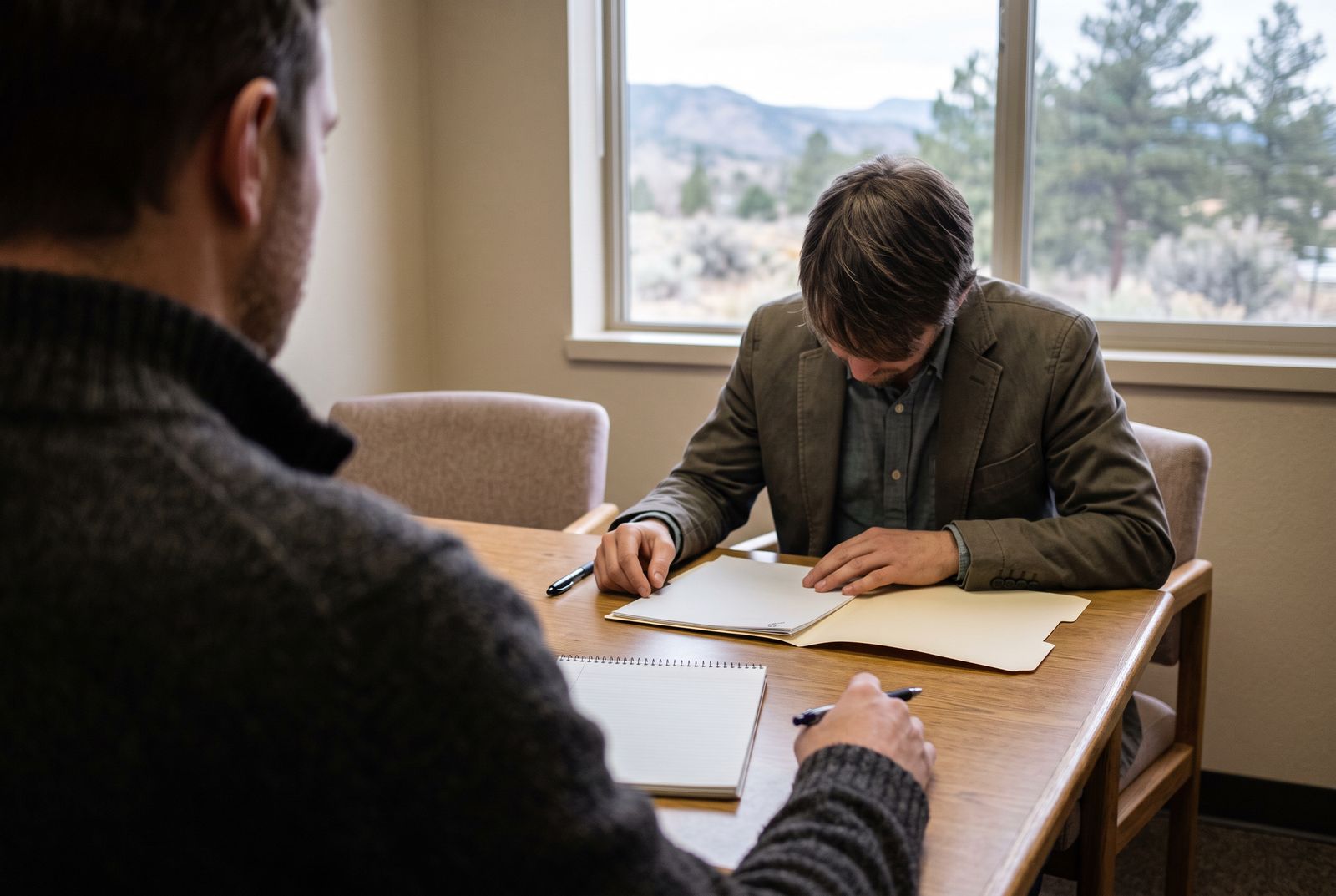 § 06
Choosing a Lawyer
How to check a lawyer's Colorado license, questions to ask in a first meeting, and how public defender eligibility works in general terms.
Read the choosing a lawyer guide
Three habits: Read the paperwork you are handed. Note every court date. Ask a licensed Colorado lawyer.
A missed court date can lead to a warrant and a new charge for failure to appear. The bond paperwork and summons list the date, time and courtroom; keep a copy somewhere you will actually look.
Sheet 02 · Principles
Four protections every Colorado defendant has
These come from the United States Constitution, the Colorado Constitution and Colorado statutes. They apply whether the charge is a petty offense or a felony. Select a cell below to read each one.
Principle 01
Presumed innocent
The prosecution carries the burden of proving every element of a charge beyond a reasonable doubt. A person accused does not have to prove anything, and a jury may not hold silence against them.
Principle 02
The right to a lawyer
Anyone facing possible jail time has the right to be represented, and a person who cannot afford counsel may apply for a court-appointed lawyer, often the Office of the Colorado State Public Defender. Details are in our guide to choosing a defense lawyer.
Principle 03
The right to remain silent
No one can be compelled to be a witness against themselves. Using the right means saying so clearly and then staying calm and cooperative with lawful orders; it is never a license to resist, run or give false information.
Principle 04
A speedy trial
Colorado's speedy trial statute, C.R.S. 18-1-405, and Crim. P. 48 generally require trial within six months of a not guilty plea, with exceptions for delays the defense requests or causes. The clock and its exceptions are technical; ask a lawyer how they apply.
Before you go further
Common questions about the Denver criminal process
These answers are general. The guides go deeper, and a licensed Colorado attorney can apply the law to the facts of a real case, which no website can do.
Is this website a law firm or a lawyer referral service?
No. Denver Criminal Law Guide is an independent legal information resource. It is not a law firm, does not refer cases, does not provide legal advice, and contacting us does not create an attorney-client relationship. For advice about a specific case, talk to a licensed Colorado attorney.
Which court hears a criminal case in Denver?
In general, misdemeanors, traffic offenses and Denver municipal ordinance violations are heard in Denver County Court, and felonies are heard in Denver District Court, part of Colorado's Second Judicial District. Both handle criminal matters at the Lindsey-Flanigan Courthouse on West Colfax Avenue. The paperwork you receive names the court, courtroom and date that apply to you.
What is the first court date after an arrest called?
It is usually called the advisement or first appearance. A judge or magistrate explains the charges or possible charges, the rights the person has, and the conditions of bond. Our Denver bond hearing guide explains that hearing step by step.
Does this guide cover DUI cases?
Only briefly. A Colorado DUI case usually involves two tracks at once, the criminal case in court and a separate driver's license matter with the Division of Motor Vehicles. That second track has its own deadlines, so look for a DUI-specific resource or ask a Colorado attorney.
Where to next
Pick up where your case is today
Have a general question about how this guide works, or spotted a rule that has changed? Send a general inquiry. Please do not include details about a real case.