
Guide § 02 · First appearance
Denver Bond Hearing and Advisement Guide
The first court date after an arrest in Denver is short and fast. In a few minutes a judge or magistrate reads rights, sets bond and may issue a protection order. Here is what each of those means.
From booking to release
What usually happens in the first 72 hours
The sequence below is typical for a custodial arrest in Denver. Timing varies with the day of the week and the charge.
- 01
Booking
Identification, fingerprints, photographs and an inventory of property. A person may be held while records are checked and the case is reviewed.
- 02
Bond is reviewed or scheduled
For some lower-level charges bond is set by a schedule and can be posted before any hearing. For others, the person waits to see a judge.
- 03
Advisement
Under Crim. P. 5 the court explains the charges or possible charges, the right to remain silent, the right to counsel and how to apply for appointed counsel.
- 04
Bond and conditions set
The judge sets the bond type and amount under C.R.S. 16-4-104 and adds conditions such as no new offenses and appearance at every court date.
- 05
Protection order, if required
In many cases a mandatory protection order under C.R.S. 18-1-1001 takes effect at the first appearance and stays in place while the case is open.
- 06
Release and the next date
Once bond is posted the person is released with paperwork listing the next court date. That document is the one to keep.
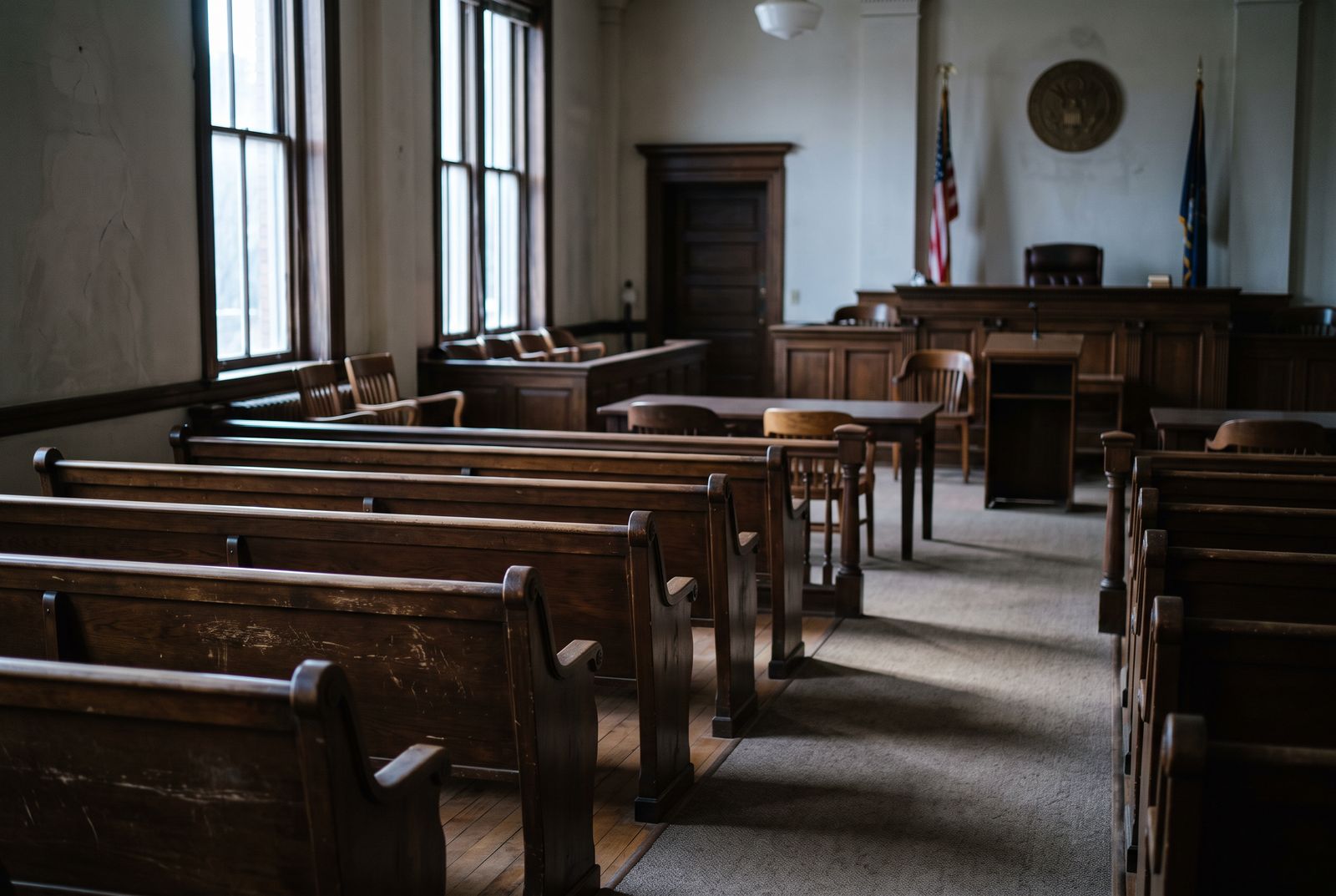
Families often call this hearing "bail court." The formal names are advisement and bond hearing, and in a Denver case they usually happen together, at the Lindsey-Flanigan Courthouse or by video from the jail.
§ 1What the advisement covers
The advisement is not the place where guilt is argued. Its purpose is to make sure the person in custody knows what they are accused of and what rights they have. Under Crim. P. 5 the court generally covers the nature of the charges, the right to remain silent and that anything said can be used in court, the right to a lawyer and to request a court-appointed lawyer, and the right to a preliminary hearing in eligible felony cases.
Hearings move quickly, and the courtroom is usually full of other people's cases. Statements made out loud in that room are on the record. Many people choose to say very little beyond answering the judge's direct questions, and to save the facts for a private conversation with a lawyer.
Pro tip
If you are a family member watching an advisement, bring a pen. The next court date, the courtroom number and the bond amount are often said once and quickly. You can also ask the clerk's office later for a copy of the bond paperwork.
§ 2The bond types Colorado law allows
Colorado's bail statutes (C.R.S. 16-4-101 and following) let a court choose among several forms of bond. The names below are the ones you will hear in Denver courtrooms.
| Bond type | What is posted | What to know |
|---|---|---|
| Personal recognizance (PR) | A signed promise; no money up front | The bond amount can be ordered paid if the person fails to appear or violates conditions |
| Cash | The full amount in cash or approved payment | Money may be returned at the end of the case, though courts can apply it to fines, costs or restitution |
| Surety (commercial) | A licensed bail bond agent posts it; the person pays the agent a fee | The agent's fee is generally not refundable; read the agent's contract carefully |
| Property | Real property pledged as security | Requires documentation of ownership and value and takes longer to arrange |
§ 3How a judge decides bond
Colorado law directs courts to consider whether a person is likely to return to court and whether release poses a risk to public safety, and to use the least restrictive conditions that address those concerns. Judges commonly look at the charge, any prior record and history of appearing in court, employment and family ties to the area, and information from a pretrial risk assessment where one is used.
The prosecutor and the defense can both speak to bond. A defense lawyer at the hearing can point the court to facts that support a lower amount or a PR bond. A person without a lawyer at the hearing can ask how to apply for a public defender; see our public defender eligibility overview.
§ 4Conditions of release
Every bond comes with conditions, and violating them can lead to arrest and revocation. Typical conditions include:
- appearing at every scheduled court date;
- committing no new offenses;
- no contact with the alleged victim or certain witnesses;
- check-ins with pretrial services, sometimes with alcohol or drug monitoring;
- no possession of firearms or weapons while the case is open;
- travel restrictions without court permission.
The written bond is the authority. If a condition is unclear, ask the court or a lawyer before acting on a guess.
§ 5Mandatory protection orders
Under C.R.S. 18-1-1001, many criminal cases carry a mandatory protection order from the first appearance until the case ends. It typically orders the defendant not to harass, intimidate or retaliate against the alleged victim or witnesses, and in domestic violence cases it often bars any contact at all, including through other people or social media. A protection order stays in force even if the alleged victim wants contact; only a judge can change it.
The messy middle: shared homes and shared children
The hardest protection-order situations involve people who live together or share parenting time. The order may bar going home for clothes, medication or a car. Courts generally have a process for a supervised civil standby to collect belongings, and a lawyer can ask the judge to modify terms. Until a judge signs a change, the original order controls.
§ 6For family members trying to help
Family members are often the ones making calls while the person is in custody. Useful steps, in general terms: confirm the person's full legal name and date of birth for jail lookups; ask the jail or court when the advisement is scheduled; write down bond type and amount once set; and avoid discussing the facts of the case on jail phone lines, which are commonly recorded.
Rules change Colorado statutes and court rules are amended often, and the version that applies depends on the date of the alleged offense. Check the current text on the Colorado General Assembly and Colorado Judicial Branch websites, and confirm with a licensed Colorado attorney. Bail law in Colorado has been revised several times in recent years.
The bottom line
- The advisement explains charges and rights; it is not a trial.
- Four common bond forms: PR, cash, surety and property.
- Bond conditions and protection orders are binding until a judge changes them.
- Next step after release: the date on the paperwork, and the rest of the case process.
§ 7Questions about Denver bond hearings
How soon after an arrest is the advisement in Denver?
Colorado's rules require that a person held in custody be brought before a court without unnecessary delay. In practice that is often the next court day, and timing can stretch over weekends and holidays. The jail or the court clerk can tell family members when a hearing is scheduled.
What is a PR bond?
A personal recognizance bond is a release on a written promise to appear and follow conditions, without posting money up front. If the person fails to appear or violates a condition, the court can revoke the bond and order the amount listed on it paid.
Can a bond amount be changed after the first hearing?
Yes. Either side can ask the court to modify bond, usually by written motion and a hearing. A judge considers factors such as appearance history, ties to the community and public safety. A defense lawyer can explain whether a modification request makes sense.
Does a protection order mean the person cannot go home?
It can. A mandatory protection order often bars contact with the alleged victim, and if that person lives at the same address the order can bar returning home. Read the order closely, ask the court for a copy, and follow it exactly until a judge changes it.
After release
Plan for the next court date, and the one after
The case now moves to filing and arraignment. A lawyer, retained or appointed, is the right person for case-specific questions.